System level
Strategies, plans, general framework conditions and methods for data generation.


AT-Verband project
Empowering urban regions for cooperative, synergistic and practical implementation of sustainability and resilience strategies considering the urban-rural nexus.
About emplement!
emplement! is a joint R&D project within the Sustainable Development of Urban Regions programme, funded by the German Federal Ministry of Education and Research (BMBF) and facilitated by the DLR Project Management Agency.
Within the framework of the overarching objective of sustainable urban regions, the project contributes to strengthening the resilience of cities, their environs and urban regions. After a 6-month preparatory phase and an 18-month definition phase, the project entered its 4-year R&D phase on 01.06.2021 and runs until 31.05.2025.
The objective of emplement! is to develop transferable tools and the capacities required to enable the involved actors in Da Nang City and the neighbouring Quang Nam Province to implement sustainability and resilience strategies and plans in practical and synergistic ways.


Objectives
Rapid urbanisation presents cities and their surrounding regions with major challenges, not only because of
increasing resource consumption and its consequences, but also because of climate change and the threats of
associated disasters. Strategies and plans need to be developed, but they also need to be practically
implemented.
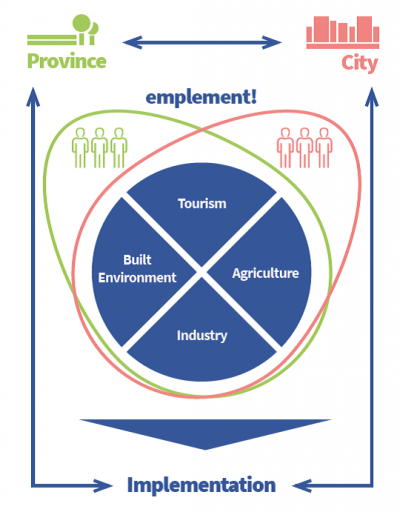
Objective of emplement! is to develop transferable tools and the needed capacities that enable the involved players in the target area Da Nang City and the adjacent Quang Nam Province to implement sustainability and resilience strategies and plans into practical and synergetic measures. At this the city and province are not considered separately, but with special emphasis on their systemic interdependencies. The development of the tools takes place at three different levels:
Strategies, plans, general framework conditions and methods for data generation.
Appropriate technologies and decision-support approaches for local conditions.
Obstacle analysis, showcases and research on how implementation can succeed.
Methods and tools designed so they can be adapted to other regional contexts.
Given the economic importance for Da Nang and Quang Nam, emplement! focuses on these four fields of action. Implementation should be sustainable, resource-efficient, scalable, emission-reducing and financially viable over the long term.
Implementation should be sustainable, insofar as the technologies must be resource-efficient, scalable, emission-reducing, and thereof contribute to the reduction of GHGs. But they also must be financially sustainable and operational in the long term. In the structured implementation dialog, the balance between technically possible and appropriate is to be found. Technologies and concepts for the four fields of action are elaborated in such a way that they contribute, inter alia, to resilience against drought and flooding.
Fields of research
emplement! develops transferable methods, tools and capacities so that administrations and involved actors in Da Nang and Quang Nam can translate relevant strategies and plans into practical, efficient, sustainable and resilient measures that work together in synergy.
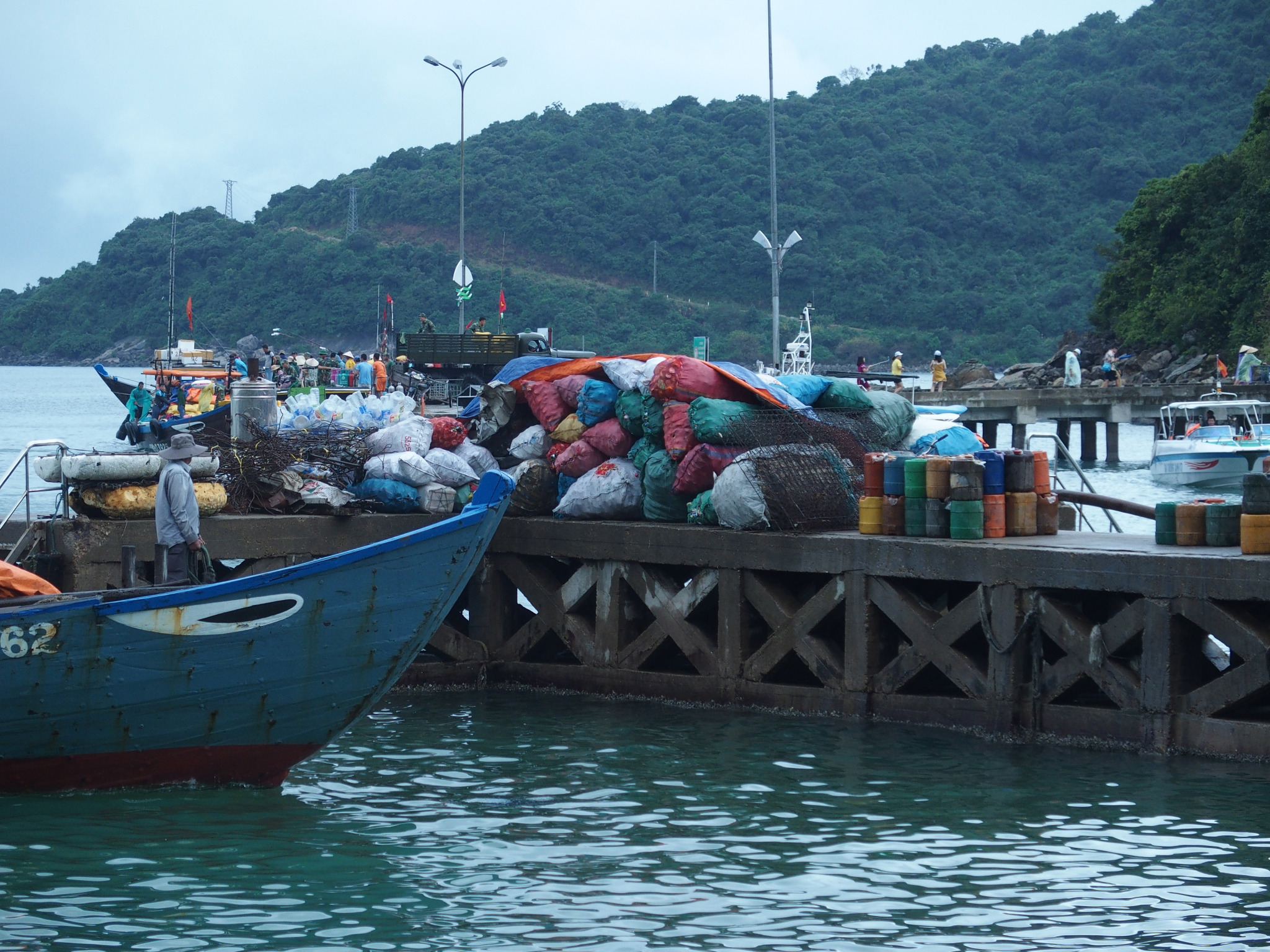
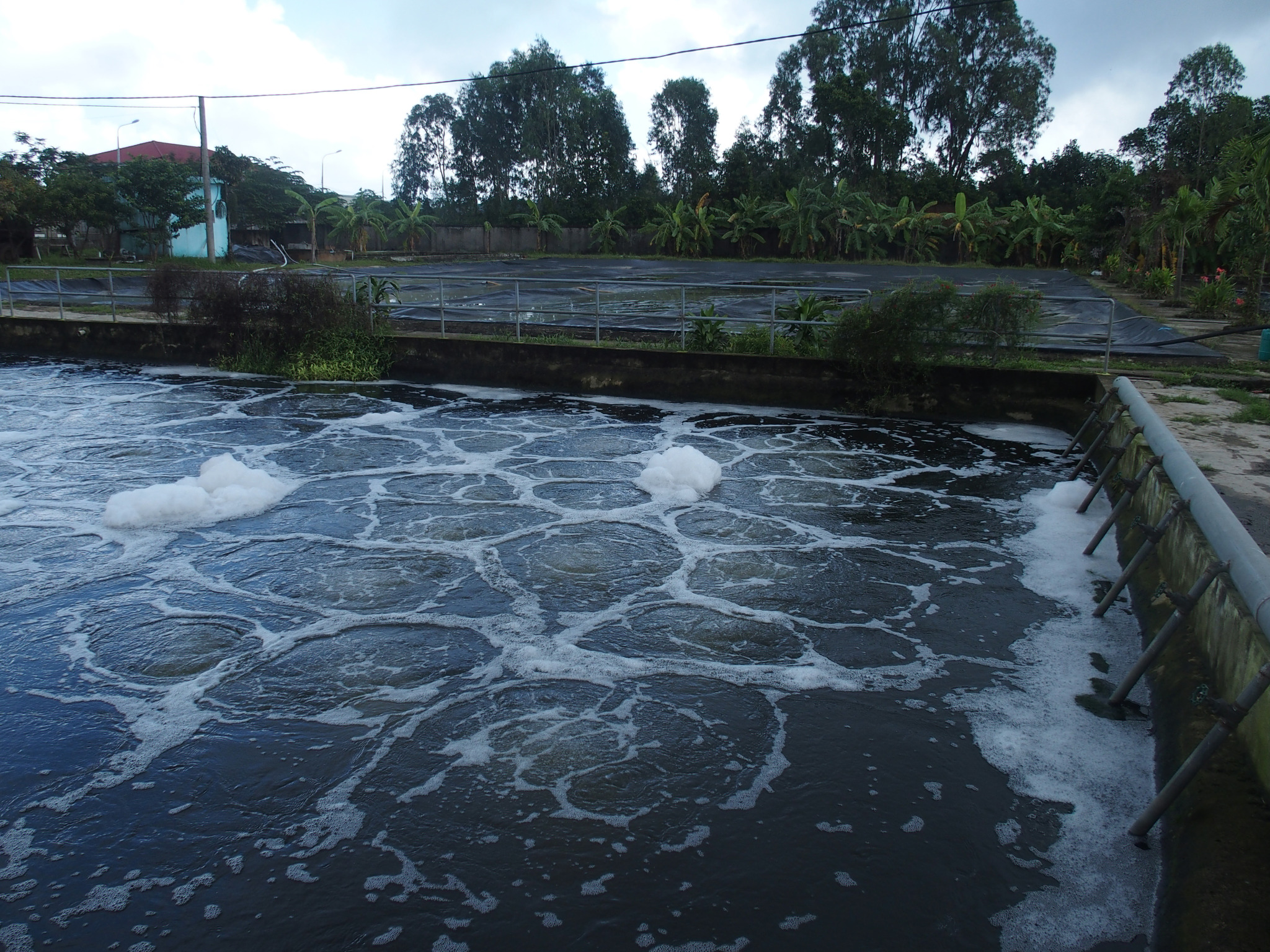
An important part of the project is the implementation process for infrastructure such as green technologies and procedures in water and energy supply, wastewater and waste disposal. Within this implementation approach, sustainability and climate protection are to be anchored and resilience is to be strengthened through intensive cooperation in the urban-rural context.
In the R&D phase, implementation activities such as pilot projects are carried out within the four fields of action. These pilots are accompanied scientifically with developed or adapted methods that consider conceptual, technical and trans-sectoral synergies.
The pilot projects will be accompanied and analysed scientifically with developed or adapted methods, considering possible conceptual and technical as well as trans-sectoral synergies. The pilot projects are designed in such a way that they can be conceptually and technically networked with each other and transferred to other regional contexts.
The showcases are analysed with conceptual, technical and cross-sector methods to identify synergies, obstacles and scaling potential.
Questionnaires, obstacle analyses, summer schools and practical trainings strengthen local competences and contribute to a future toolbox.
SUMMER SCHOOL
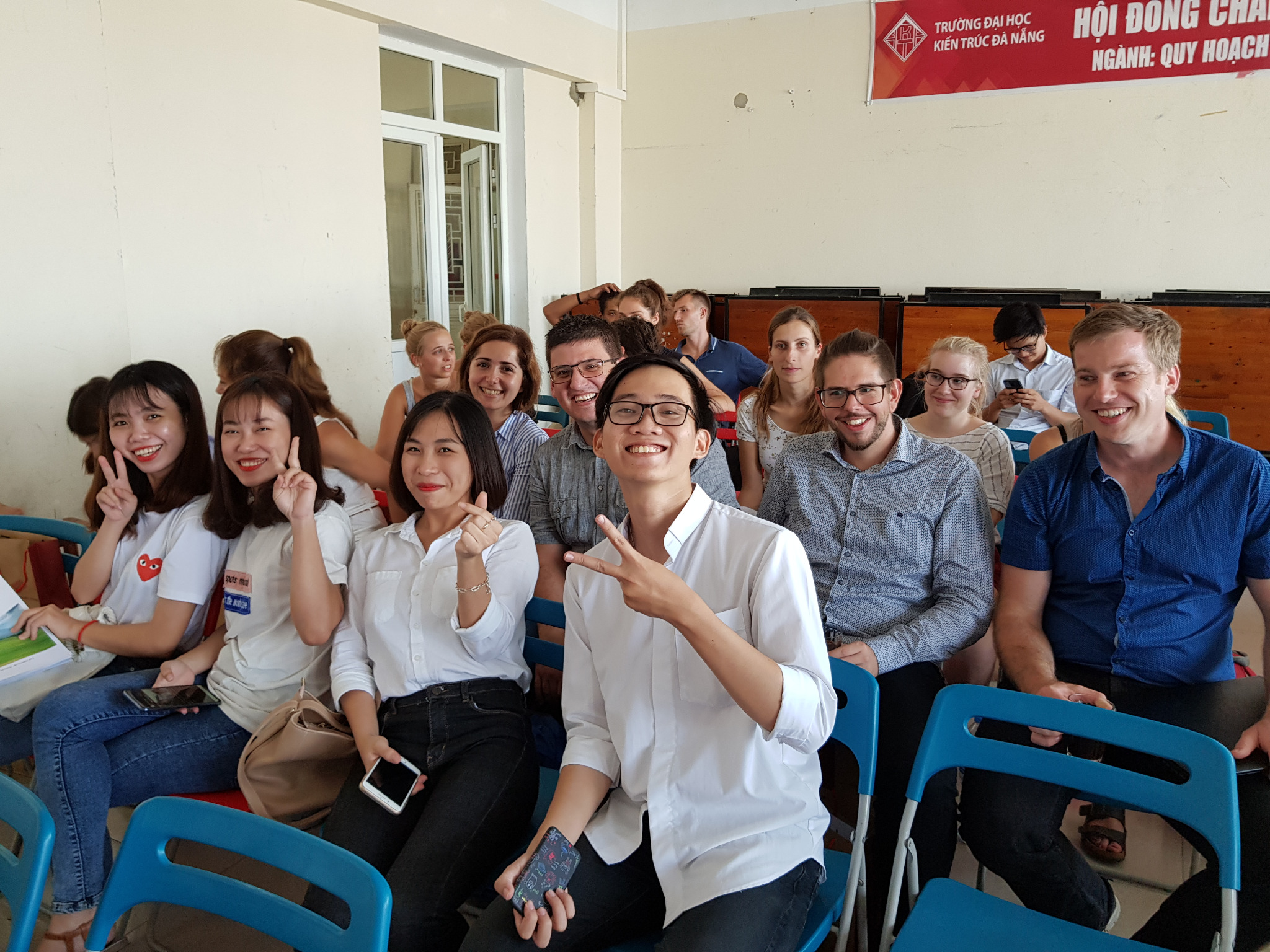
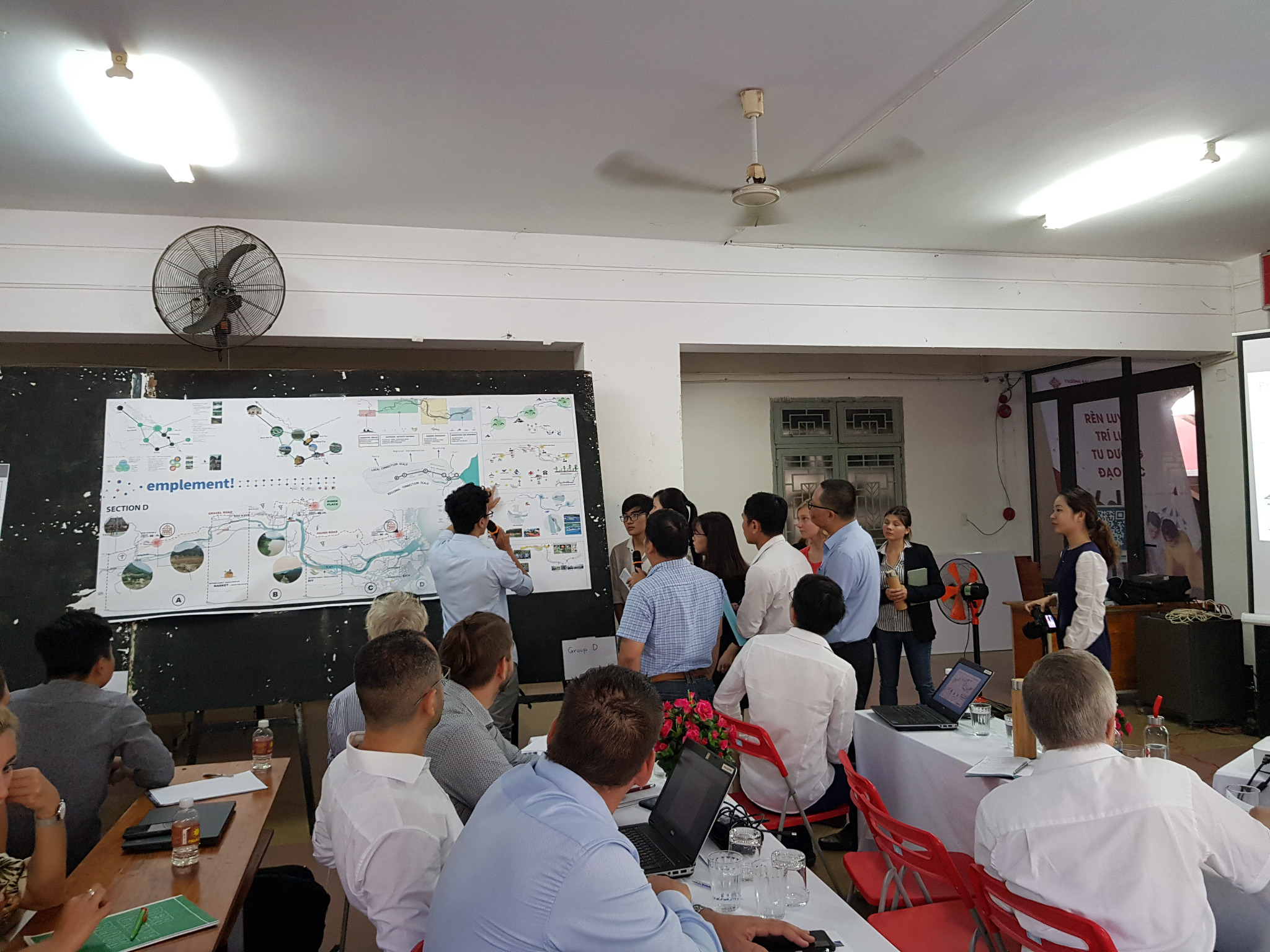
emplement! Summer School with 50 Vietnamese and German students on tourism development in September 2019
Field of action "Tourism" - 24 September to 4 October 2019 The city of Da Nang and its neighbouring province Quang Nam have a large tourism potential due to their scenic variety. The current development, however, is mainly aimed at mass tourism in Da Nang and Hoi An, which poses great challenges for the environment, but also for water and energy supply as well as waste and waste water disposal.
There are no concepts for the development of tourism so far that combine ecological and economic aspects in a sustainable manner. In order to highlight the possibilities for sustainable tourism along the Cu De river, an interdisciplinary two-week summer school took place in Da Nang at the end of September 2019 with approx. 50 German and Vietnamese (Master) students, project partners and representatives of the city of Frankfurt am Main.
The Frankfurt University of Applied Sciences was the responsible project partner for this event. In interdisciplinary Vietnamese-German teams, the students were to develop ideas for tourism concepts for the Green River Valley, taking into account environmental aspects, landscape protection and the necessary supply and disposal infrastructure.
Materials
Download the original project flyer with the compact overview of the project background, objectives and implementation approach.
Open flyer (PDF)Project partners
The original project page lists both the full names of the partners and their specific functions within the consortium. The overview below keeps that information together with the direct links to the partner websites.
emplement! project coordination, method approach for implementing research, regional cooperation and work on the waste topic.
Visit website →
Analysing stakeholder and administrative structure as well as material and energy flows.
Visit website →
Responsible for urban planning aspects and the analysis of existing plans and strategies for Da Nang and Quang Nam Province.
Visit website →Working on remote sensing, ecological questions and the network of relationships between city and province in the fields of action.
Visit website →
Responsible for the agricultural topic, related showcases and the provision of project information.
Visit website →Distillation trials, laboratory analyses, sensory evaluation and capacity development of the team.
Visit website →
Working on infrastructure, especially water and wastewater topics, including the introduction and analysis of showcases.
Visit website →Responsible for Vietnamese stakeholder liaison and management.
Visit website →
Promoting and coordinating collaboration across the various city departments within the project.
Visit website →
Contributing to technical engineering aspects and the topics of tourism and culture.
Visit website →
Promoting and coordinating collaboration across the departments of Quang Nam Province within the project.
Visit website →Contact
This standalone one-pager is based on the emplement! project page and keeps the visual language of the AT-Verband website while functioning as a separate web page.
AT-Verband
Waldburgstraße 96
D-70563 Stuttgart